Mold Removal in Hudson, FL
The bottom foot of the living room wall took water in Helene. You pulled the wet carpet, ran fans for a week, and painted. Now there is a gray-green band along the new baseboard and the paint is bubbling above it. This site connects you by phone with an independent local provider who does mold removal in Hudson and across Pasco County.
What the crew does first
The crew reads the wall before touching it. A pin meter on the drywall and a non-invasive meter on the block tell them how high the water got inside the wall, which is usually higher than the stain. They mark that line on every wall in the room and on the shared walls behind it.
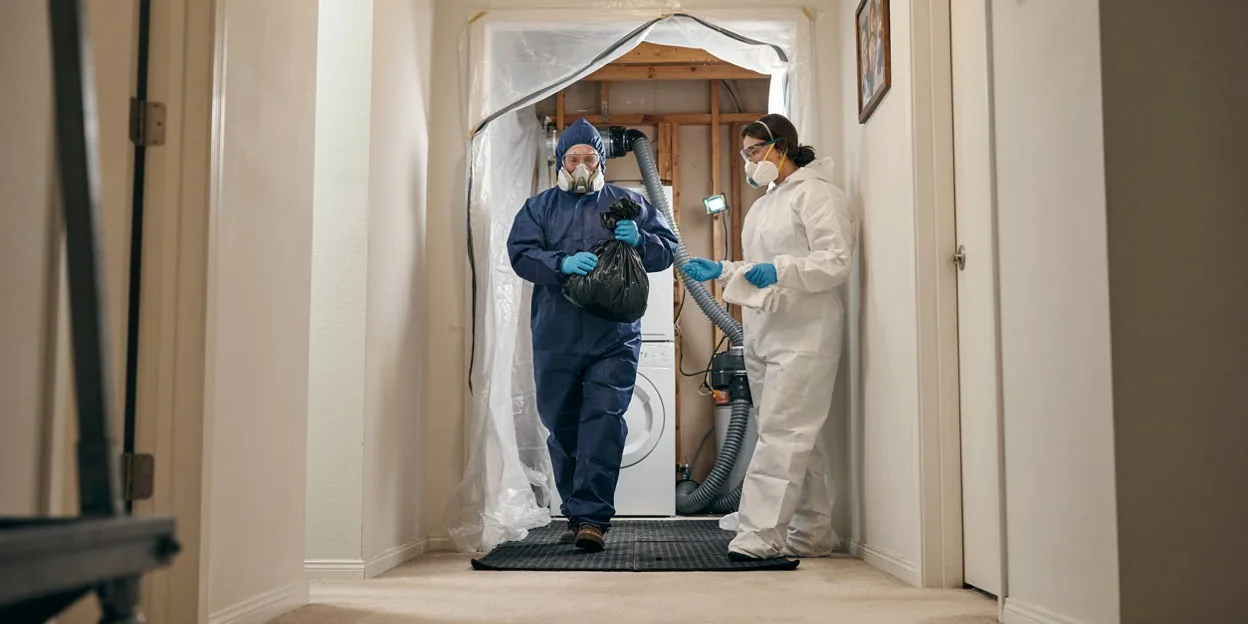
Then they build containment. Plastic goes up across the doorway, the supply and return grilles in the room get taped over, and an air scrubber with a HEPA filter is set to pull air out of the room and exhaust it outside. That keeps the room under negative pressure, so dust from the demolition does not travel down the hall.
What to do in the next hour
Do not pull the drywall yourself. A wet board with growth on it sheds spores when it tears, and without containment they end up in the air handler. Close the door, set the thermostat fan to auto instead of on, and keep the air conditioning running.
Skip the bleach. It wets the paper and does nothing for the growth inside the board. Photograph the wall, the baseboard, and anything that shows how high the water got. If there is still a leak, shut it off. If the water was surge, note the date and the height on the outside of the house.
What is usually saved and what is removed
Drywall, baseboard, insulation, carpet pad, and the paper backing on cabinets come out when they are wet and growing. The crew cuts the drywall a set distance above the meter line and bags it inside the containment. On a block house the block itself stays. So does the slab, the metal or treated-wood bottom plate if it reads dry, and any tile.
After the demolition, every surface in the room gets HEPA vacuumed and wiped. Then drying equipment runs, sometimes for a week or more, because block gives up water slowly. The crew rechecks the block cells before anyone talks about new drywall. If the growth reaches into the attic or the ducts, see attic mold remediation or HVAC mold cleaning. If the whole floor took water, see whole-home mold remediation.
Pasco County notes: block, surge, and the two licenses
Most homes in Hudson, Bayonet Point, and Port Richey are concrete block on a slab from the 1960s through the 1980s. Block cells fill with water in a surge and drain for weeks. That is why so many houses dried by their owners after Idalia in August 2023 and Helene in September 2024 are showing growth on new paint a year later.
Florida licenses mold remediators and mold assessors separately under Chapter 468, Part XVI. For work larger than about ten square feet, the company that assessed the house may not remediate it. Look up the remediator's license before signing, and ask for a written scope.
Rebuilding after removal usually needs a permit through Pasco County, or the city if you are inside New Port Richey or Port Richey. In a flood zone the county may also ask whether the repair counts as substantial damage. Many Florida policies cap mold coverage at a fixed amount unless an endorsement adds more, so ask your adjuster before work starts.
Calling about mold removal
Have the address, how high the water got and when, and the rough size of the growth you can see. Say whether the drywall was replaced after the storm and whether an assessor has already written a report. Call (727) 353-1690.